Welcome to the Northern Royal Albatross Conservation Committee!

We are a group dedicated to informing individuals about the issues facing Northern Royal Albatrosses.

Learn About This Species

Livestream of the colony at Taiaroa Head Island in New Zealand, courtesy of the Royal Albatross Centre, CornellLab, and New Zealand Department of Conservation

About the Northern Royal Albatross

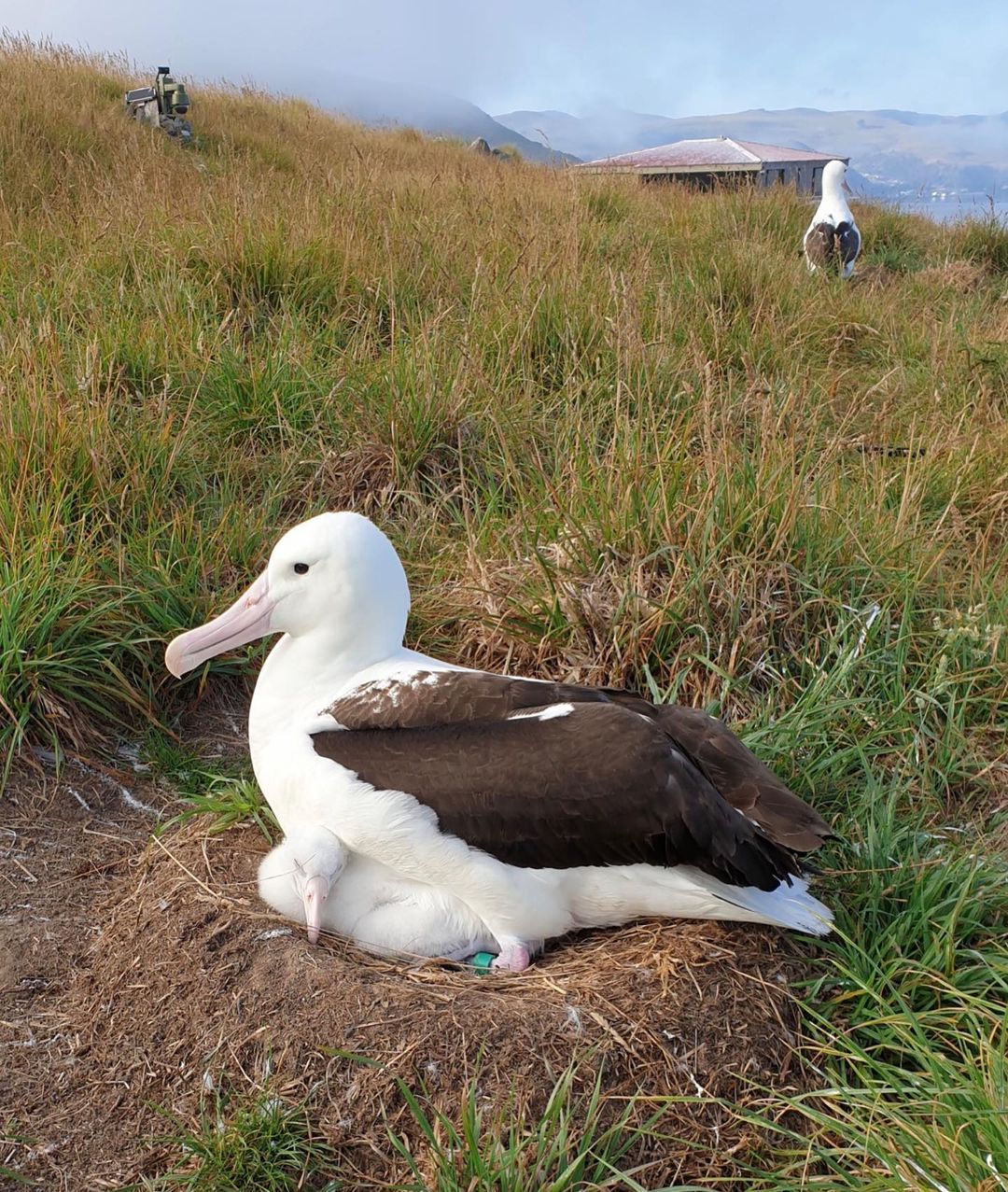
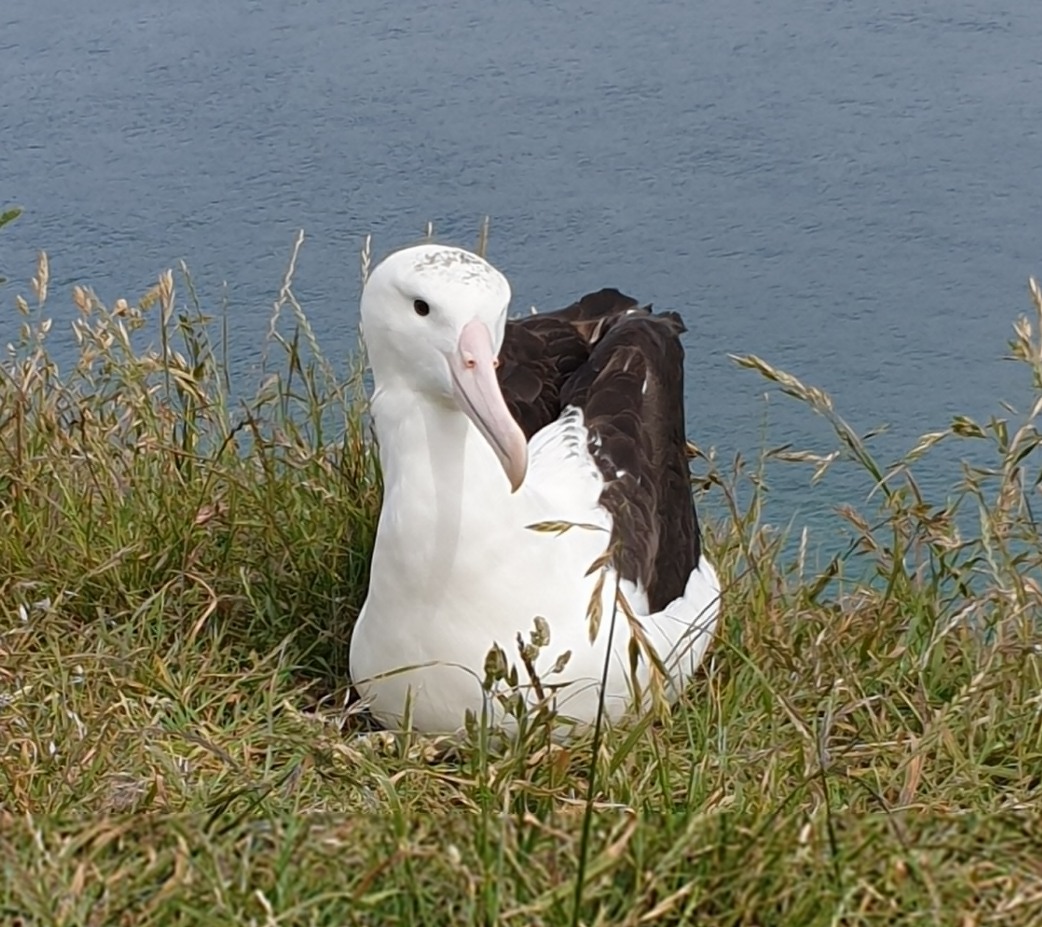
The Northern Royal Albatross (NRA), scientific name Diomedea sanfordi, is a large species of seabird in the albatross family that live around New Zealand. They are stocky white birds with dark brown wings and white underwings. Their diet mainly consists of octopi and other cephalopods. These birds are monogamous and typically mate for life, living in one colony for all of their lives. Northern Royal Albatrosses regularly live into their 40s.

Fun Facts:

  • In Maori, the language of the indigenous group of New Zealand, NRAs are called 'Toroa'.
  • NRAs have been found to fly upwards of 621 miles (1,000 kilometers) per day!
  • The average wingspan of NRAs is 105 to 120 inches (266 to 305 centimeters) and they can be up to 4 feet (1.2 meters) tall! Despite their large stature, they typically weigh only 14 to 18 pound (6.3 to 8.2 kilograms)!
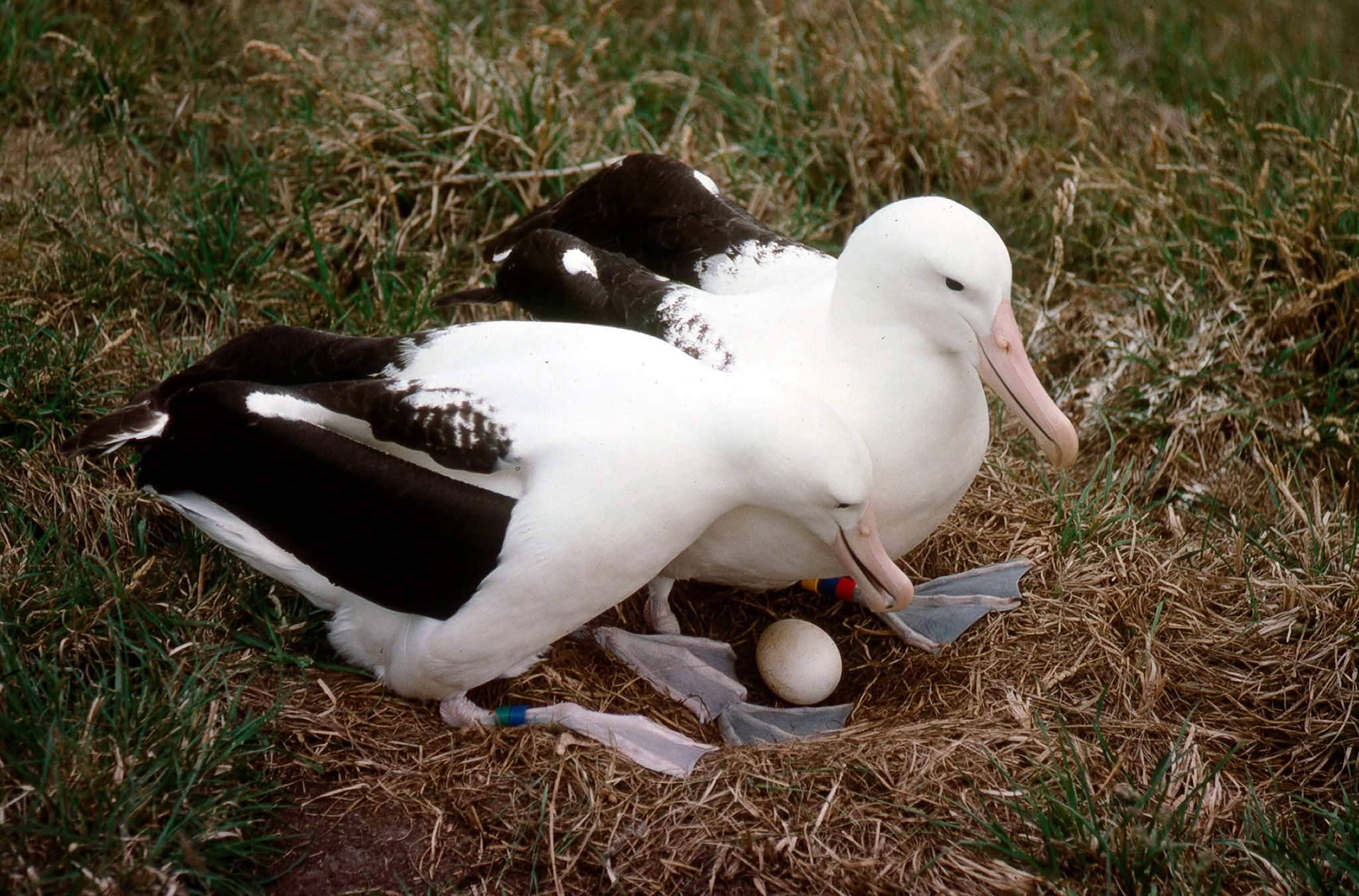
  • Unlike many other birds, NRAs lay only one egg per clutch. This egg is incubated for approximately 79 days, which is a much longer incubation period than most other birds.
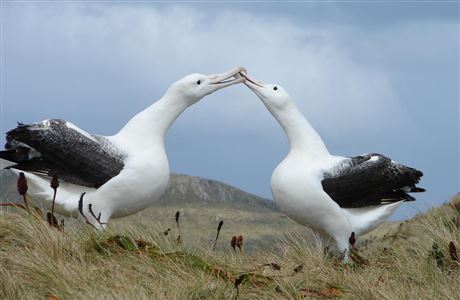
  • NRAs have intricate mating dances that they perform each courtship period. You can watch this dance here.
  • The beaks of the cephalopods that NRAs eat are undigestible and will be regurgitated.
  • The oldest recorded NRA, affectionately named 'Grandma', lived to be at least 62 years old!

Life Cycle and Breeding

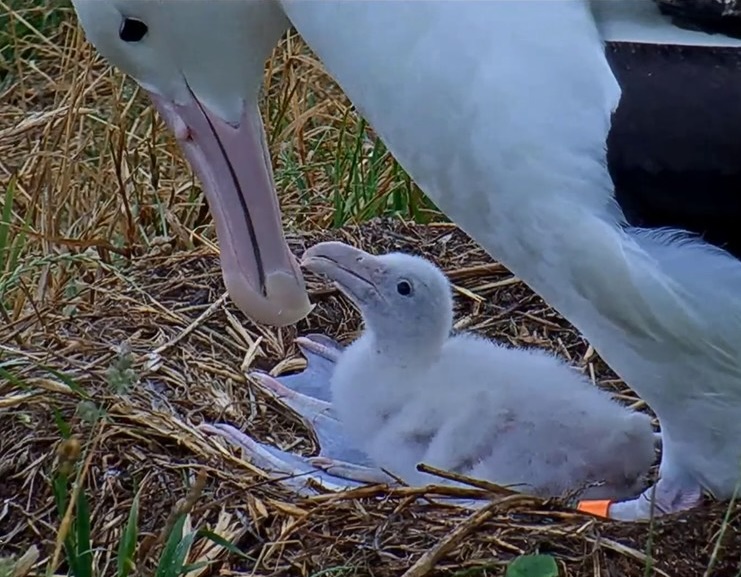
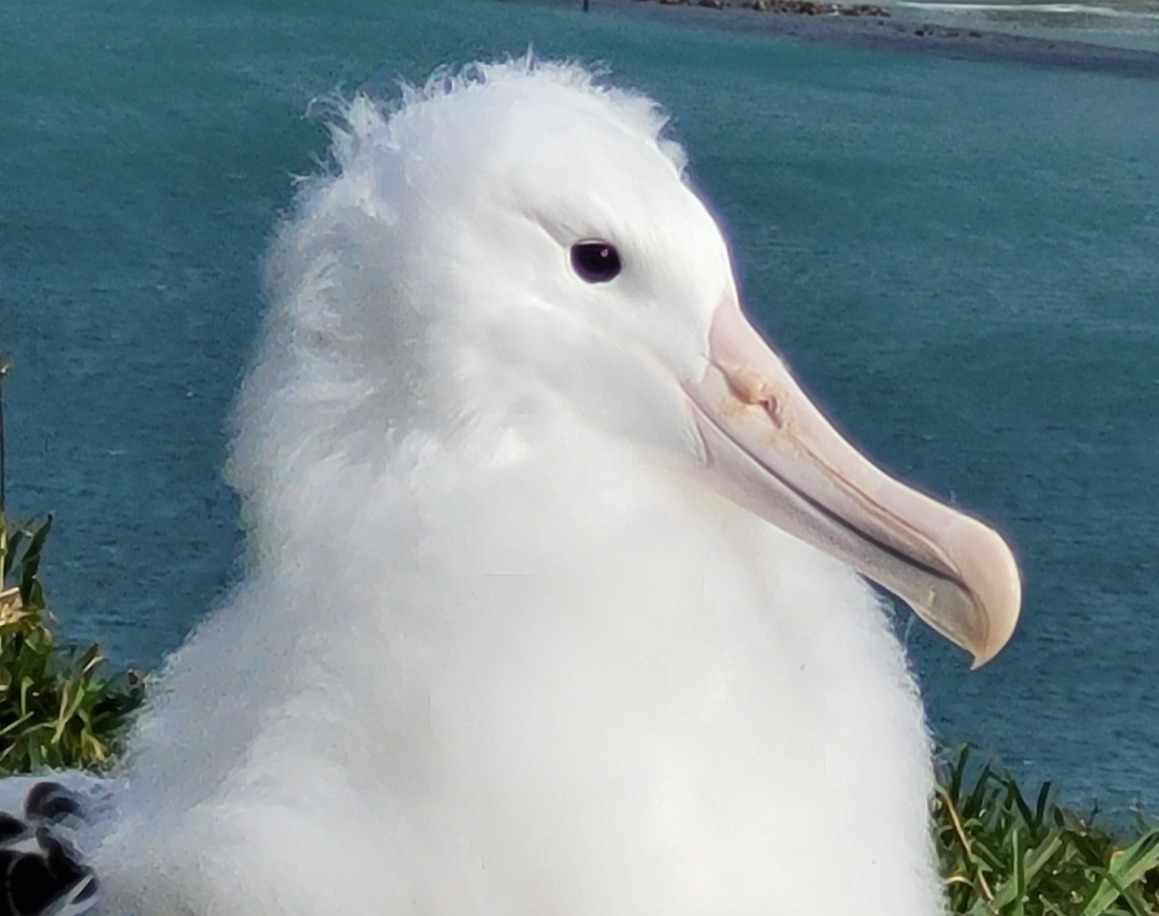
Northern Royal Albatrosses have 4 distinct life stages: egg, nestling, juveline, and adult. Baby NRAs will spend an average of 240 days in the nesting area as nestlings before fledging (leaving the nesting area for good when able to fly). In the first 20 to 40 days of life as nestlings, the parents will stay with their chicks in a phase known as the 'guard stage'. The rest of their time as nestlings is spent alone in the nest and exploring the area surrounding the nest. After fledging, NRAs move from the nestling stage to the juvenile stage. They are considered juveniles until age 4 or 5, when they will return to the nesting site to court and raise their own chicks. After returning to the colony for the first time, NRAs are considered adults.

Click here to view a monthly breakdown of a year in an NRA colony!
Population Decline

There are many factors that have contributed to the decline of the Northern Royal Albatross, from breeding behavior to manmade plastics. The main causes are habitat destruction, introduced species, pollution, and commercial fishing.

Although a natural cause, the breeding behavior of the NRA is a factor in their declining population. Adult NRAs lay only one egg every two years. It takes 4-5 years after fledging for juvenile NRAs to become adults that are ready to mate and lay eggs. This infrequent breeding cycle that results in only one egg coupled with the long non-breeding periods of juveniles leads to low numbers of new chicks each year.

Climate change is a major factor in habitat destruction. As the ocean warms, serious storms are becoming much more common. One of the most notable examples of this occurred in 1985, when a devastating storm hit one of the largest breeding colonies in the Chatham Islands off the coast of New Zealand. The storm completely destroyed the land that was once high above the ocean, covered in tall grasses, an ideal nesting site for NRAs. Consequently, only about 3% of NRA nestlings on the Chatham Islands fledge. Although the breeding site is recovering, the rate of egg laying and fledging is still low.

All non-native species pose some sort of danger to NRAs, but domestic animals and mice are the most dangerous. Pets such as cats and dogs that are allowed to roam freely have been known to attack NRA chicks, scare breeding pairs away from nest sites, and eat fertilized eggs. Arguably more threatening are the simple house mice. These mice are notorious for eating NRA chicks alive, spreading untreatable diseases, and biting adult NRAs. The bitten adults commonly develop deadly infections.

As birds that hunt for their food in the ocean, plastic pollution is a major issue. Plastics and other items such as cigarette butts are frequently found in the regurgitation of both adults and chicks. In the most heartbreaking cases, NRA chicks who are unknowingly fed plastic by their parents will die. In some monitored NRA colonies, plastic and other garbage is found in the regurgitation of all chicks. Items as large as 16oz/500mL plastic water bottles have been found in the stomachs of NRA adults during autopsies.

Commercial fishing boats present danger to NRAs in a variety of ways. The unwanted parts of the caught fish are thrown overboard, attracting NRAs looking for an easy meal. When they dive into the water to grab the fish pieces, many get caught in the boat propellers, cables, and nets. This usually leads to death, but in rare cases where they survive, the birds are permanently mutilated. In 2020, the Natural History Museum released an article (linked here) stating that some fishermen, in order to free the albatrosses from fishing line and hooks, will slice the beaks of the birds off.

Conservation Efforts

Groups such as the New Zealand Department of Conservation, the Royal Albatross Centre, and the Agreement on the Conservation of Albatrosses and Petrels have made great strides toward recovering the NRA population. The Royal Albatross Centre, under permission from the New Zealand Department of Conservation, conducts year-round monitoring of the NRA breeding colony on Taiaroa Head Island in New Zealand. The group tracks chick weights, behavior of chicks and parents, chick health, adult breeding activity, and much more. The Agreement on the Conservation of Albatrosses and Petrels, along with federal governments, has passed protective legislature limiting and reforming commercial fishing, created protected spaces such as nature reserves, and helped eliminate invasive mice species. These groups have also led countless educational endeavors and lobbied for the protection of seabirds.

Contact Us!

Have any questions? Want to learn how to support conservation efforts? Reach out to us at any of the contacts below!

Phone: 540-421-0390
Email: chris.lou.lam@gmail.com